guide
Hi, I'm João. Ask me about my work by text or voice, or let me walk you through the portfolio myself.
Writing
Long-form technical write-ups, project notes, and engineering essays will appear here as they are published.
published / Jul 10, 2026
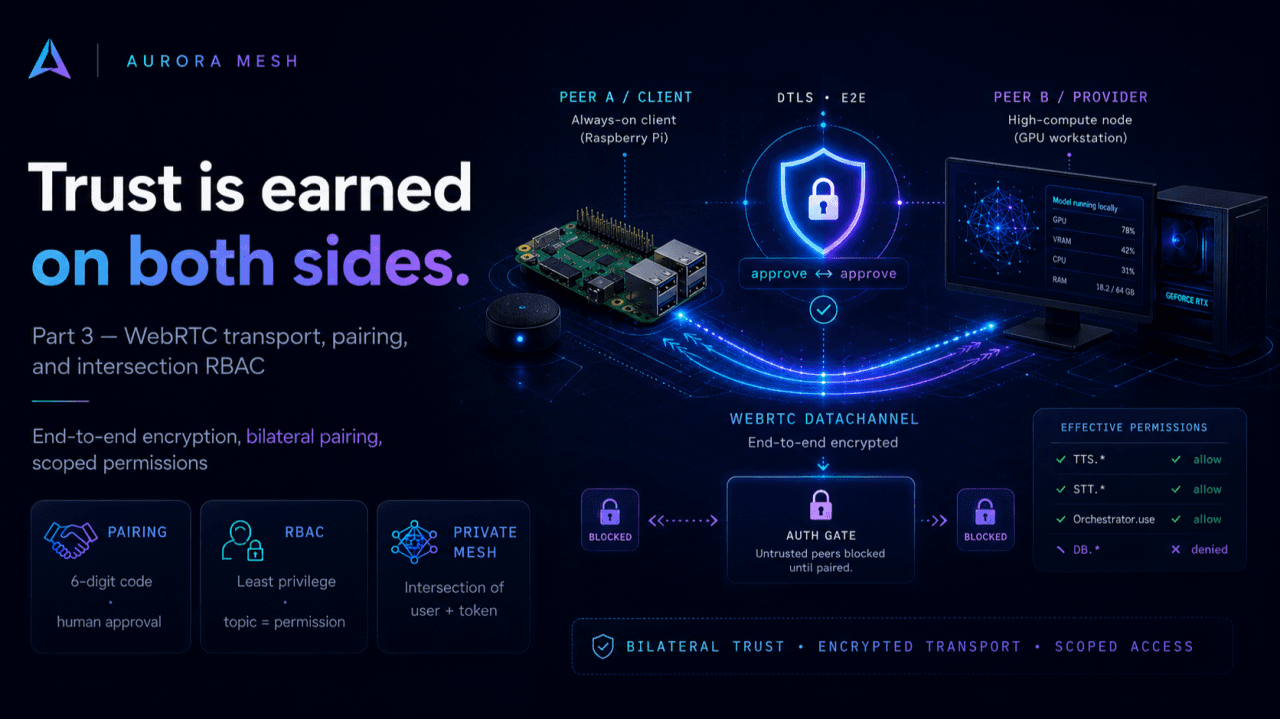
The moment one of your devices can ask another to run an LLM or read your data, you have an attack surface inside your own home. How Aurora's mesh earns trust on both sides: WebRTC transport, Bluetooth-style pairing, and intersection RBAC.
published / Jun 30, 2026
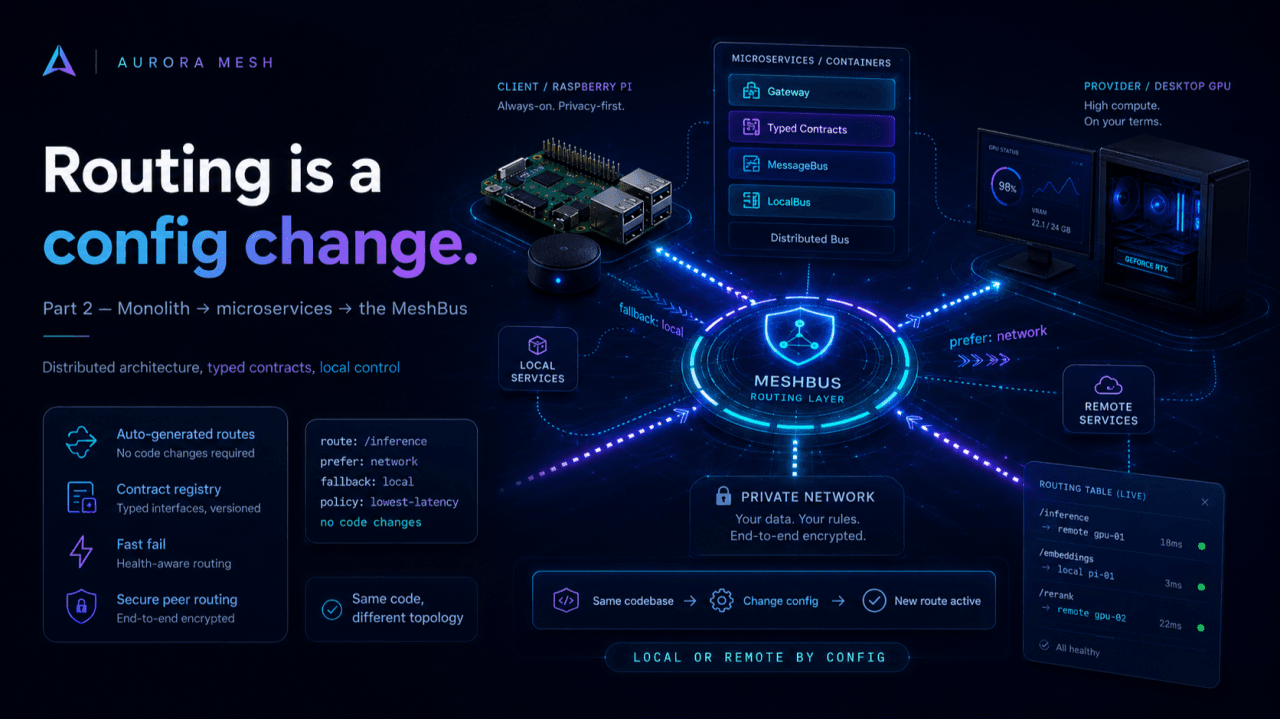
Routing a request to another machine should be a config change, not a rewrite. The contract-driven architecture that lets Aurora split into a mesh without refactoring: one bus, two topologies, and a gateway that builds itself.
published / Jun 25, 2026
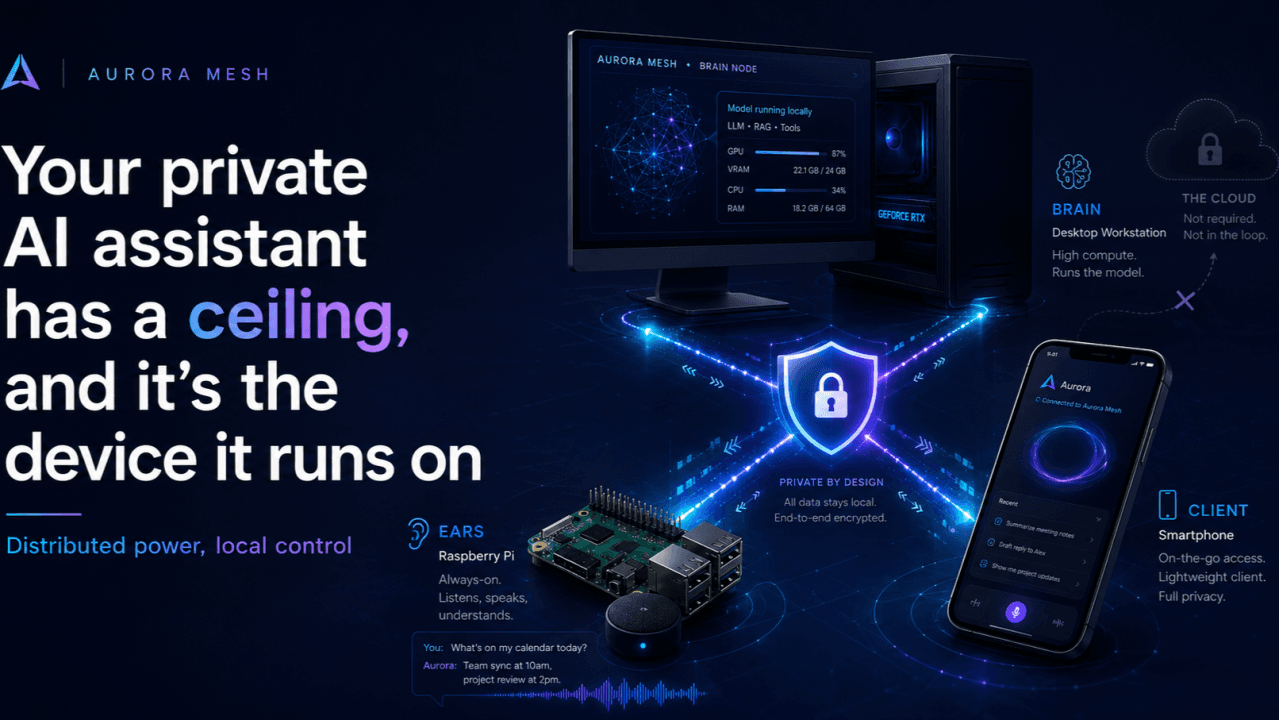
Running AI locally means a single device sets your ceiling. Why local-first assistants run out of room, and how a distributed, user-controlled mesh of your own machines raises that limit without giving up privacy.
published / Jun 5, 2026
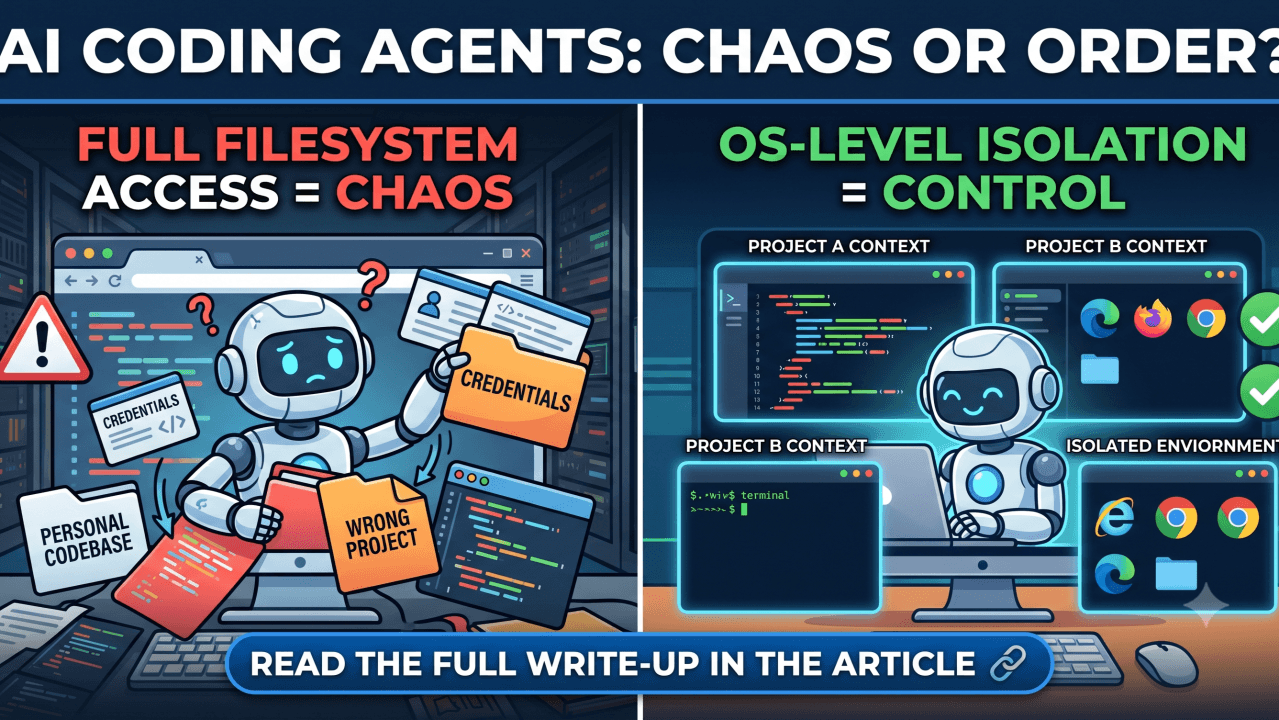
Claude Code, Cursor, and similar agents read files across your whole filesystem. Why that is a real isolation problem, and the encrypted per-project sandbox I built to contain it without killing usability.
published / Nov 5, 2025
Aurora is my open-source, local-first voice assistant: wake word, 24/7 opt-in transcription, tool-calling orchestration, MCP support, RAG memory, scheduling, and a distributed mesh — all running on your own hardware.
published / Jun 18, 2024
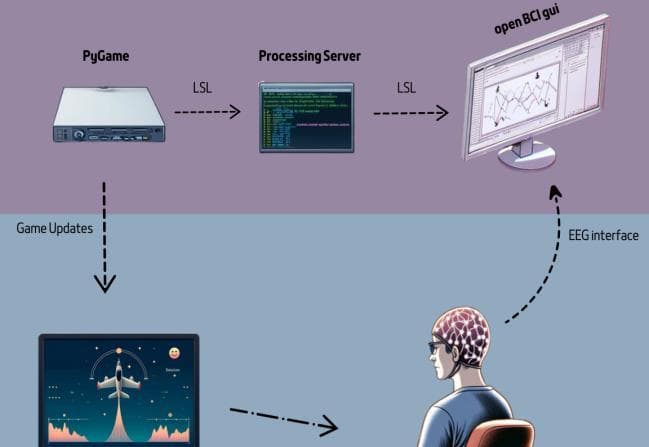
The peer-reviewed write-up behind my Brain Signal Processing Game: an OpenBCI + Lab Streaming Layer EEG pipeline and a Pygame rocket game that trains sustained attention in adults with ADHD through Beta-rhythm neurofeedback. Published in the XIV CONCCEPAR proceedings (2024).
Voice guide
guide
Hi, I'm João. Ask me about my work by text or voice, or let me walk you through the portfolio myself.